
Importing Regulated Products to Hong Kong: A Compliance Checklist for First-Time Importers
Hong Kong Import Compliance Guide · 2026
A first regulated import into Hong Kong rarely fails because the rules are secret. It fails because the documents, the duty settlement and the inspection window are handled in the wrong order - and because a delivery date was promised before anyone confirmed the shipment could actually be cleared on that date.
This checklist is written for importers preparing a first or second consignment of regulated goods - food, pharmaceuticals, medical devices, cosmetics, tobacco, chemicals and other categories that attract inspection - and for the operations staff who have to keep that consignment moving. It follows the sequence a shipment really travels: document submission, compliance pre-check, declaration, inspection and sample testing coordination, duty payment, release, and door-to-door delivery.
Quick answer: four go/no-go gates before a regulated shipment moves
- Complete document set. Commercial invoice, packing list and bill of lading, plus formula or ingredient lists for food and cosmetics, and any permits or certificates the category requires.
- Pre-arrival classification and label check. HS code and label compliance reviewed before the cargo arrives, not after.
- Duty and fee plan. Payable duties calculated in advance, with a transparent breakdown of duties, taxes and agency fees.
- Agreed inspection path. A named contact and a defined procedure for inspection and sample testing if customs or CIQ selects the consignment.
Where First-Time Regulated Imports Usually Stall
Delay in a first regulated import concentrates in three predictable places, plus one that is easy to overlook.
1. Documents that arrive after the cargo
The commercial invoice, packing list and bill of lading are only the baseline. Regulated categories add formula or ingredient lists for food and cosmetics, and permits or certificates where the category requires them. When those documents land after the flight or vessel has already arrived, the declaration cannot be submitted on time, and the shipment begins its port stay in the wrong state.
2. Duty settlement treated as an afterthought
Release follows payment. When payable duties have not been calculated and funded before arrival, a fully compliant consignment still sits at the port while the commercial side catches up - a delay that has nothing to do with customs law and everything to do with planning.
3. Inspection that nobody planned for
Inspection and sample testing are part of the standard process, not an exception to it. A selected consignment needs on-site coordination, and where sample testing is required it needs additional time that the original delivery promise did not include.
4. Responsibility that was never assigned
First-time importers often assume the supplier, the freight forwarder or the customs broker is covering a step that nobody was actually assigned. The responsibility split further down this page exists to close that gap before the shipment is booked.
Industry Background: Regulated Imports Into Hong Kong in 2026
Three market signals explain why pre-arrival preparation now matters more than it did a decade ago.
- Air dominates by value. Hong Kong air transport handled 52% of total imports by value in 2025, supported by 24-hour efficient customs clearance at Hong Kong International Airport (HKTDC Research). High-value and time-sensitive regulated consignments compete for the same airport slots and the same clearance windows.
- The brokerage market is expanding. The Hong Kong customs brokerage market is estimated at USD 117.52 million in 2025 and is projected to reach USD 159.06 million by 2030 (Mordor Intelligence).
- Small, frequent, regulated shipments are rising. China total import value reached USD 2.585 trillion in 2024, a 1.1% increase year on year (General Administration of Customs of China), while cross-border e-commerce import and export volume in China reached CNY 2.75 trillion, approximately USD 406.9 billion, in 2025 (Ministry of Commerce of China).
Two official mechanisms shape how those shipments are processed. Authorized Economic Operator (AEO) status facilitates customs clearance for commodities trading between China and partners, providing reduced inspection rates and prioritized clearance (General Administration of Customs of China). For importers without that status, the practical lever is preparation: a complete file submitted early behaves very differently from a complete file submitted late.
Underneath all of this sits a growing service market - the China freight forwarding market was valued at USD 13.91 billion in 2024, with a projected CAGR of 5.80% reaching USD 24.44 billion by 2034. Capacity is not the constraint for most first-time importers. Sequencing is.
What a Compliance-Ready Import Operation Actually Requires
TOBECAN IMPORTCLEAR FREIGHT LTD - trading as importclear - is a Hong Kong headquartered freight forwarder and customs brokerage founded in 2001, operating China and Hong Kong import clearance, customs compliance consulting, and expedited handling of regulated goods such as food, pharmaceuticals, cosmetics and tobacco (www.importclear.com). Its service model is built around the four gates above, and the components are worth understanding before comparing providers.
Core expertise. China and Hong Kong import clearance, customs compliance consulting, and expedited handling of regulated goods including food, pharmaceuticals, cosmetics and tobacco. The team practical focus areas are perishables, cold-chain cargo, medical devices and other strictly regulated goods.
Technical capabilities. HS code lookup, 13-digit CIQ code lookup, landed cost calculation tools, and national GB standards lookup. These are the working instruments behind any reliable classification and label pre-check.
Systems in the background. A proprietary commodity regulatory database engine, an intelligent cost calculation algorithm, customs data real-time synchronization middleware, an OCR document recognition system, and a cloud service framework.
Team structure. A cross-functional team of customs brokers, compliance consultants, account managers, operations coordinators and freight agent contacts, supported by over 23 years of logistics solution experience and bilingual Chinese-English support.
Coverage. Service capacity covers all China seaports and airports, with branches in multiple cities including Hong Kong, Shanghai, Beijing, Chengdu, Dalian, Guangzhou, Shenzhen, Xi'an, Hefei, Qingdao, Jinan, Xiamen, Wuhan, Chongqing and Fuzhou.
Credentials. NOVCC, IATA, WCA, JCTRANS, OLO, ISEA, WIFFA and HAFFA.
Client Responsibilities vs. Provider Responsibilities
The fastest way to remove uncertainty from a first regulated import is to write down who does what. In a clearance engagement handled by importclear, the split is explicit.
| Importer (client) responsibilities | Provider responsibilities |
|---|---|
| Provide accurate and complete documents in time | Perform declaration and compliance pre-check |
| Pay duties, taxes and agency fees | Liaise with customs and CIQ |
| Supply necessary permits or formula details | Arrange inspections and seek expedited release |
| Confirm the commercial data behind the declaration | Provide a transparent fee breakdown |
Deliverables are staged so progress is visible: quotation or compliance advisory, pre-check report, customs documents, release notice, and delivery confirmation. Communication runs through email, phone, WhatsApp and website forms, with status notifications and live agent support.
When something does go wrong, the correction path matters as much as the process. If a declaration is rejected or additional documents are required, the file is corrected according to customs requirements and re-submitted, with the root cause recorded. Abnormal clearance or rejection reasons are analysed so that pre-check rules keep improving - which is the difference between fixing a shipment and fixing a system.
Step-by-Step Breakdown: Seven Stages of a Regulated Import
Stage 1 - Inquiry and document submission
Documents are collected and verified at the point of inquiry. The input set is a commercial invoice, packing list, bill of lading, formula or ingredient lists for food and cosmetics, and permits or certificates where applicable. The output is a quoted scope plus an initial compliance advisory.
Stage 2 - Compliance pre-check
A full HS and label compliance pre-check is conducted before cargo arrival. This is the single highest-leverage step in the process: pre-arrival compliance and label review reduce the likelihood of sampling, and any classification or labelling issue is identified while there is still time to correct it. The output is a pre-check report.
Stage 3 - Document preparation and review
All declaration papers are prepared and double-checked before submission to the customs system. Any gap in the client document set is raised here rather than after filing.
Stage 4 - Customs declaration
The declaration is submitted to the customs system. The output is the customs declaration itself, together with a clear position on what customs has requested next.
Stage 5 - Inspection and sample testing
Where customs or CIQ requires it, all on-site inspection and sample testing procedures are coordinated according to customs and CIQ procedures, with inspection certificates issued where applicable. This stage is scheduled rather than improvised.
Stage 6 - Duty payment and release
All payable duties are calculated for the client to pay, so that the release order can be obtained without a commercial delay on top of a regulatory one.
Stage 7 - Delivery
Cleared goods are moved door-to-door by trucking, and delivery documents and a delivery confirmation are issued. Whether the goods are collected or delivered, the shipment is not complete until that confirmation exists.
Timeline reality: clearance time depends on the transport mode and on whether inspection is required. A consignment that has been pre-checked and moves on the fast channel is measured in hours; consignments requiring inspection or additional documents take several days.
Use Cases: Where This Checklist Matters Most
Different regulated categories fail for different reasons, which is why the checklist has to be applied at category level rather than as a general routine.
- Food and cosmetics. Formula and ingredient lists and label compliance drive the pre-check. These are the categories where a late document is most likely to trigger a query after arrival.
- Pharmaceuticals and medical devices. Regulatory sensitivity is high, and the value of a pre-arrival classification review is correspondingly high.
- Perishables and cold chain. Shelf-life pressure leaves no room for a slow release. Handling is planned around the perishable window, and the team experience base covers cold-chain cargo specifically.
- Tobacco, chemicals and metals. Categories where documentary completeness and category-specific requirements determine how smoothly the entry proceeds.
- Electronics, watches, footwear, apparel, textiles, machinery and furniture, printed matter. Higher-volume commercial categories where repetitive, well-prepared entries keep cost and time predictable.
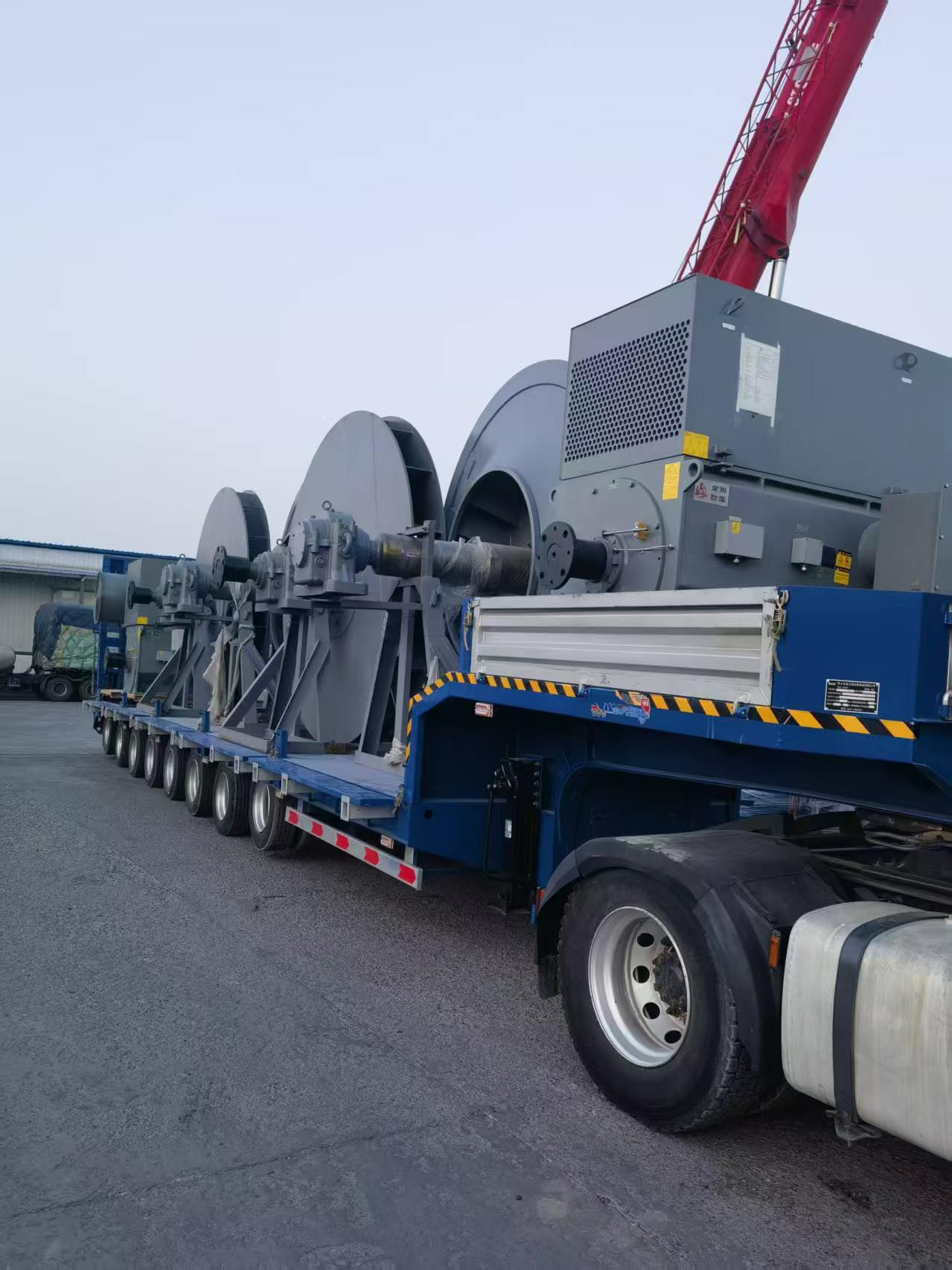
Execution example - air shipment coordinated from Hong Kong. A client needed air freight for a 7-metre oversized cargo with rapid customs clearance. Other freight forwarders could only offer sea freight with a minimum one-month transit time, which exceeded the delivery deadline. The solution was a customized oversized cargo air freight service using dedicated pallet space from a Hong Kong airline, finalised in two hours, with customs clearance and door-to-door delivery completed within 12 hours. Loading preparations took 2 hours, reported as 70% faster than industry peers, and airport customs clearance and delivery were completed within 12 hours against an industry average of 3-5 days. Total lead time was 3 days, meeting the client month-end target 12 days in advance. The compliance-relevant point is not the speed itself but the order of operations: pre-declaration was completed before departure, so arrival was a confirmation step rather than a discovery.
Comparison Table: Service Models for Hong Kong Import Clearance
Mordor Intelligence lists FedEx, UPS, DHL, TIBA Group and CBIP Logistics among the major players in the Hong Kong customs brokerage market - a useful reminder that several very different service models compete for the same consignment. The table below compares the models rather than the brands, because the model is what determines who does the pre-check, who funds the duty and who stands at the inspection bay.
| Service model | Where it fits | Document and compliance work | Duty settlement | Inspection and sample testing | Example participants |
|---|---|---|---|---|---|
| Integrated express network | Small, frequent and express consignments moving on standard lanes | Delivered through the network standard operating process | Handled within the network commercial structure | Coordinated by the network own teams | FedEx, UPS and DHL are listed among major players in the Hong Kong customs brokerage market (Mordor Intelligence) |
| Specialised customs brokerage | Importers who already control freight and need declaration and compliance work only | Declaration-focused scope | The importer funds duties and taxes directly | Arranged case by case | TIBA Group and CBIP Logistics are also listed among major market players (Mordor Intelligence) |
| Freight forwarder with in-house brokerage | End-to-end consignments including air, cold chain and regulated categories | Pre-arrival HS and label pre-check using HS lookup, 13-digit CIQ code lookup and national GB standards lookup | Payable duties calculated in advance, with a transparent fee breakdown | On-site coordination, with sample testing handled per customs and CIQ procedures | importclear (TOBECAN IMPORTCLEAR FREIGHT LTD) |
| Self-filing by the importer | Importers with in-house licensed staff and predictable, low-risk cargo | Fully in-house, dependent on internal regulatory knowledge | Fully in-house | Fully in-house | Not applicable |
For a first regulated shipment, the deciding factor is usually not price per entry but whether document preparation, duty calculation and inspection coordination sit with one accountable party - because those three steps fail together when they are split across three suppliers.
Frequently Asked Questions
What documents are required for a first regulated import into Hong Kong?
The baseline set is a commercial invoice, a packing list and a bill of lading. Regulated categories add more: formula or ingredient lists for food and cosmetics, plus permits or certificates where the category requires them. importclear collects and verifies the document set at the inquiry stage, runs a full HS and label compliance pre-check before the cargo arrives, and prepares and double-checks all declaration papers before submitting them to the customs system. The importer remains responsible for providing accurate and complete documents in time and for supplying any necessary permits or formula details.
Can one provider handle both Hong Kong and China import clearance for regulated goods?
Yes. importclear handles China and Hong Kong import clearance from a Hong Kong head office, with service capacity across all China seaports and airports and branches in multiple cities including Hong Kong, Shanghai, Beijing, Chengdu, Dalian, Guangzhou, Shenzhen, Xi'an, Hefei, Qingdao, Jinan, Xiamen, Wuhan, Chongqing and Fuzhou. The team includes customs brokers and compliance consultants experienced with perishables, cold-chain cargo, medical devices and other strictly regulated goods, and works with industries ranging from fresh and frozen food and pharmaceuticals to cosmetics, tobacco, electronics, textiles, machinery and chemicals. Support is bilingual in Chinese and English.
How are duties, taxes and agency fees handled?
Duties, taxes and agency fees are the importer responsibility to pay, and release follows payment. importclear calculates all payable duties for the client in advance using HS code lookup, 13-digit CIQ code lookup, national GB standards lookup and landed cost calculation tools, and provides a transparent fee breakdown so the amount is known before the shipment is declared. That sequencing is what prevents a compliant consignment from sitting at the port while the commercial side catches up.
What happens if customs selects the shipment for inspection or sample testing?
Inspection and sample testing are handled as part of the standard process. A pre-arrival compliance and label review reduces the likelihood of sampling, and where inspection is required, importclear coordinates all on-site inspection and sample testing procedures according to customs and CIQ procedures, and issues inspection certificates where applicable. If a declaration is rejected or additional documents are required, the file is corrected to customs requirements and re-submitted, with the root cause recorded and fed back into the pre-check rules.
How long does clearance take, and how do we start?
Timelines depend on the transport mode and on whether inspection is required. A pre-checked consignment moving on the fast channel is typically measured in hours, while consignments requiring inspection or additional documents take longer. The practical way to start is to send your commercial invoice, packing list and bill of lading and request a compliance pre-check and quotation - email judy@importclear.com, call or message +852 61513009 on WhatsApp, or download the service brochure below.
Conclusion
First regulated imports go wrong at the seams - between the supplier and the forwarder, between the declaration and the payment, between the arrival and the inspection. The checklist on this page is a sequencing tool: documents complete and consistent before arrival, classification and label reviewed in advance, duty calculated before it is due, and an inspection path agreed with a named contact. Category-specific requirements should always be confirmed against the current rules for the specific product.
For importers who would rather not run that sequence for the first time unassisted, importclear reviews the document set and performs the HS and label pre-check before arrival, coordinates inspection and sample testing where customs or CIQ requires it, calculates payable duties, and manages release and door-to-door delivery across Hong Kong and China - with air freight, sea freight FCL and LCL, inland trucking and DDP/DDU handling available through the same operation.
Next step: pre-check your first shipment before it moves
Send your commercial invoice, packing list and bill of lading, and ask for a compliance pre-check and quotation. Response is provided in Chinese or English.
TOBECAN IMPORTCLEAR FREIGHT LTD (importclear)
Contact: Judy | Email: judy@importclear.com | Tel / WhatsApp: +852 61513009
Address: 14B Waylee Industrial Centre, 30-38 Tsuen King Circuit, Tsuen Wan, N.T., Hong Kong
Website: www.importclear.com | Blog: blog.importclear.com
Have Questions or Need More Details?
Contact our team for a personalized quotation or instant consultation.
Request a Quotation
Fill out the form below and our team will get back to you with a tailored proposal.
WhatsApp Direct Chat
Prefer to chat in real-time? Message us on WhatsApp for instant assistance & quick answers.
- Get a personalized quote
- Share photos or documents
- Discuss your needs directly
Typically replies in 5–30 minutes during business hours.