
Customs Clearance Agent Evaluation Criteria for Importers
Capability metrics and delivery guarantees to test before appointing an import customs clearance partner in China or Hong Kong.
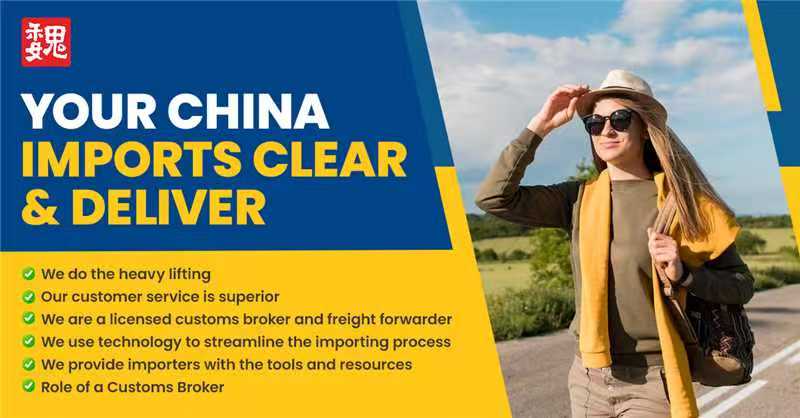
importclear provides import customs clearance, freight forwarding and door-to-door delivery across China and Hong Kong.
An importer should evaluate a customs clearance agent on six verifiable criteria: operating scale and continuity, in-house compliance and engineering support, documentation and declaration control, geographic coverage at the release points that matter, measurable delivery performance, and written commercial transparency. Everything else — price headlines, brand familiarity, verbal promises about fast clearance — is secondary, because an agent's real capability becomes visible only when a declaration is queried, an inspection is triggered, or a fixed delivery deadline is at risk.
This decision-stage guide explains what each criterion means, how to test it with documents instead of assurances, and where a delivery guarantee stops being a slogan and starts being a measurable commitment. It uses the published operational facts of importclear (TOBECAN IMPORTCLEAR FREIGHT LTD), a Hong Kong based freight forwarder and customs clearance provider founded in 2001, as a worked example of what verifiable capability evidence looks like.
Problem Definition: Why Capability Claims Are Hard to Verify
Almost every provider in this market describes itself as fast, compliant and experienced. Those words describe outcomes rather than capabilities, and outcomes cannot be audited before an importer commits.
Three recurring gaps tend to appear when importers compare clearance agents:
- Documentation problems surface at declaration, not before. Errors in commercial invoices, packing lists or labelling are typically discovered by customs rather than by the agent, converting a paperwork issue into a storage, demurrage or missed-deadline issue.
- Classification support is unclear. Importers often cannot tell whether HS coding and CIQ compliance review is handled by a dedicated in-house team or passed to a third party under time pressure.
- A delivery guarantee has no measurement behind it. Many providers promise release speed but cannot name the metric, the baseline, the measured result or the review period.
Each gap maps to a criterion that can be tested with documents rather than with assurances.
Industry Background: A Larger Market With Narrower Differentiation
Market scale explains why so many providers sound alike. Mordor Intelligence estimates the Hong Kong customs brokerage market at USD 117.52 million in 2025 and projects it to reach USD 159.06 million by 2030. On the mainland, the General Administration of Customs of China reports that China's total import value reached USD 2.585 trillion in 2024, a 1.1% increase year on year. The China freight forwarding market was valued at USD 13.91 billion in 2024, with a projected CAGR of 5.80%, reaching USD 24.44 billion by 2034.
Cargo mix is shifting at the same time. The Ministry of Commerce of China reports cross-border e-commerce import and export volume of CNY 2.75 trillion (approximately USD 406.9 billion) in 2025, supported by streamlined customs clearance in pilot zones. In Hong Kong, HKTDC Research reports that air transport handled 52% of total imports by value in 2025, supported by 24-hour efficient customs clearance at Hong Kong International Airport.
Compliance status shapes speed as well. Authorized Economic Operator (AEO) status, administered by the General Administration of Customs of China, facilitates customs clearance for qualifying traders through reduced inspection rates and prioritized clearance.
Within this market, the Hong Kong customs brokerage sector includes both global integrators and regional specialists; Mordor Intelligence lists FedEx, UPS, DHL, TIBA Group and CBIP Logistics among the major players in the Hong Kong customs brokerage market. Their presence does not make any of them automatically suitable or unsuitable for a particular importer. It means buyers are choosing between fundamentally different operating models, and therefore need criteria rather than brand recognition.
The Six Capability Criteria and How to Test Them
1. Operating Scale and Continuity
A clearance agent that has operated continuously for more than two decades has already absorbed changes in tariff schedules, documentation systems and inspection regimes. Scale matters operationally: it determines whether one problematic shipment consumes the entire team's capacity or is absorbed by a wider roster.
importclear was founded in 2001 and today employs 88 staff, operating from a facility footprint of 10,000 m² and handling an annual freight volume reported at 8,000 TEUs. Around 70% of its business serves markets that include the EU, the USA, Hong Kong and China.

Capability evidence starts with people: named leadership, permanent headcount and in-house engineering depth.
What to test: establishment year, permanent staff count, facility area, annual handled volume and the markets already served. Request these as written figures rather than verbal descriptions.
2. In-House Compliance and Engineering Support
Classification and compliance pre-checks are where clearance risk is either created or eliminated. The practical question is who performs the HS classification and CIQ compliance review, and whether that capability sits inside the brokerage team.
importclear maintains an in-house engineering team of 12 engineers. Its service framework, the Fast Compliance Clearance Methodology (version V2.1), is a structured service framework that uses pre-arrival compliance checks and priority clearance channels to achieve fast release, with compliance first, transparent pricing and delivery-time driven execution as its stated core principles.
The methodology is positioned differently from general market practice: it combines online HS and CIQ lookup tools and discounted compliance services with traditional offline brokerage execution, which the company describes as a way to improve transparency and efficiency for importers who want to see the compliance logic rather than only the outcome.
3. Documentation and Declaration Control
Documentation control is the operational core of clearance, and an agent should be able to describe a fixed sequence with defined responsibilities at each stage.
The V2.1 process runs in seven stages: document submission, HS/CIQ pre-check, document preparation, declaration, inspection coordination, duty payment and release, and finally delivery. Import documents are collected first, then HS coding and CIQ compliance pre-checks are carried out to eliminate hidden risks, after which standardized declaration papers are compiled and submitted to customs online. If inspection is required, the broker coordinates the whole check procedure; once duties are paid, the release notice is obtained and door-to-door delivery is arranged. Every link is operated by professional brokers, which is the mechanism the company uses to avoid clearance delays.
What to test: ask for the process as a numbered list, then ask which stage is owned by which role. A provider that cannot map stages to roles is describing hope rather than process.
4. Geographic Coverage and Handover Points
Coverage is not a map graphic; it is the set of physical points where cargo can be held, inspected, released and re-loaded. Importers should ask for named locations rather than regions.
importclear operates a warehouse in Tsuen Wan, Hong Kong, at 14B Waylee Industrial Centre, 30 – 38 Tsuen King Circuit, and provides D/O release service in Vietnam, China and Hong Kong. Its declared service scope covers sea freight (FCL and LCL), air freight solutions, inland trucking, customs clearance and DDP/DDU handling, together with a cross-border truck service for cargo from China, positioned as flexible handling with fast transit via Hong Kong using direct trucking.
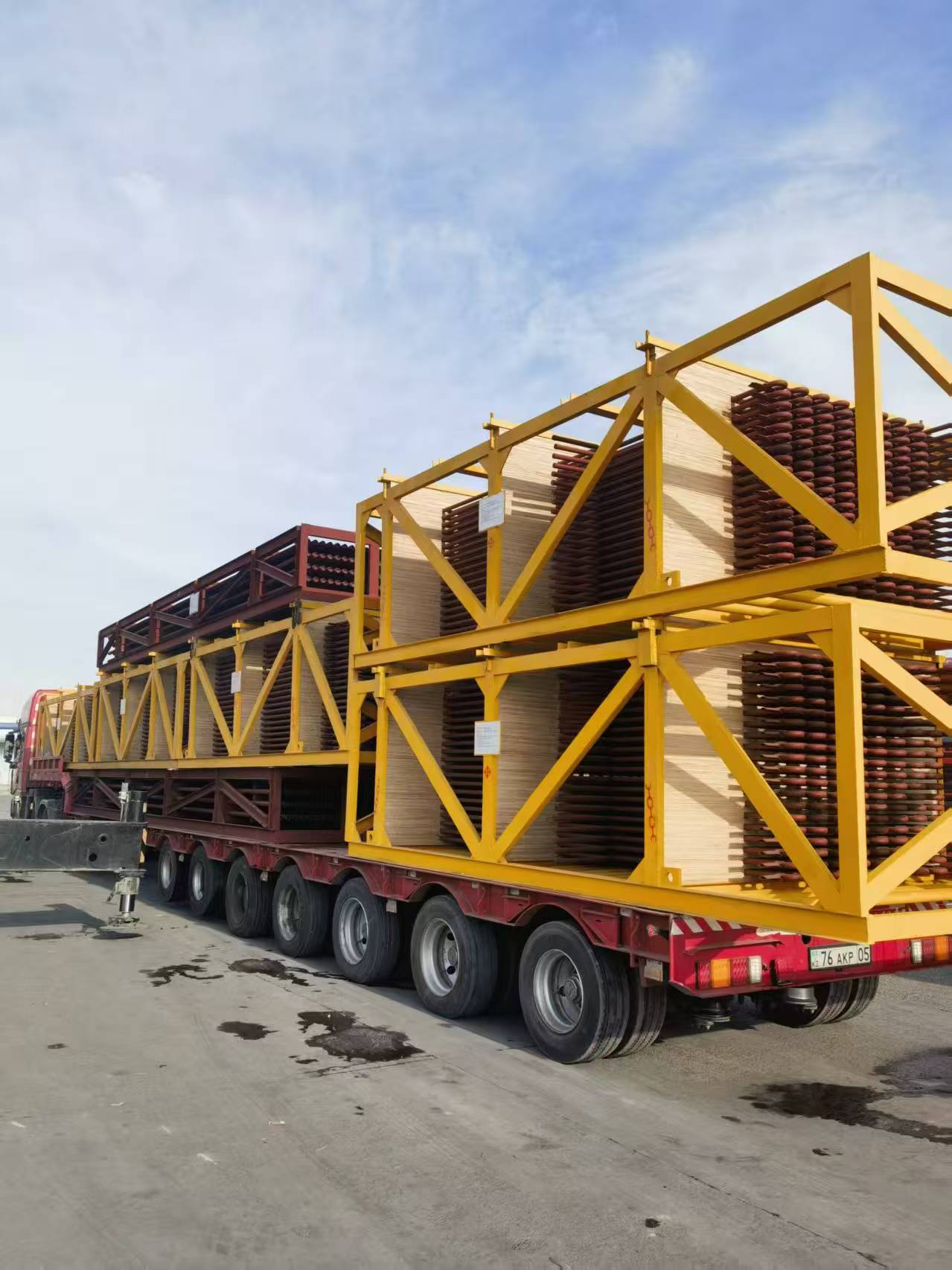
Coverage is tested at handover points: named warehouses, named release locations and the trucking links between them.
What to test: named warehouses, named release points, which modes the agent handles directly, and how cargo is handed over between those points.
5. Measurable Delivery Performance
This is the criterion that turns a capability claim into a delivery guarantee, and it is the one most often skipped during evaluation. A credible agent should be able to name the metric, the baseline, the result, the measurement period and the proof source.
importclear reports performance under operational efficiency and compliance metrics covering clearance timeliness, clearance success rate and average release time. The reported baseline value was 6%, and the result achieved after a two-month measurement period was 2%, an improvement of 4 percentage points or a 66.7% improvement rate. The company reports a 300% ROI on the same basis, with project reports and client feedback cited as proof sources, and states that impact is typically visible from the first declaration when compliance pre-checks are adequate.
Why the qualifier matters: a guarantee that states its condition — typically visible from the first declaration if compliance pre-checks are adequate — is more useful than an unconditional promise, because it tells the importer which internal factor they control. Time to value in clearance depends partly on the quality of documents supplied before arrival.
6. Commercial Transparency and Scope Limits
Transparent pricing is one of the three core principles of the Fast Compliance Clearance Methodology, alongside compliance first and delivery-time driven execution. That matters at decision stage because a price structure that separates compliance work, brokerage and transport is easier to audit than a single landed figure.
Equally important is knowing what an agent does not do. importclear states that the methodology is not suitable for legal disputes, tax controversies, or complex compliance disputes requiring legal counsel. Importers should expect an equivalent boundary statement from every provider under consideration. An agent claiming to cover every scenario is describing an aspiration rather than a scope.
Step-by-Step: Running the Evaluation
The evaluation can be completed in six steps, using documents the provider should already possess.
- Define the lane and cargo profile. List origin, destination, mode, commodity type and any regulated attributes before contacting providers, so every answer is compared against the same question set.
- Request operating evidence. Establishment year, staff numbers, in-house engineering headcount, facility footprint and annual handled volume. For importclear, that evidence set is 2001, 88 employees, 12 engineers, a 10,000 m² facility and an annual freight volume reported at 8,000 TEUs.
- Test the pre-arrival compliance process. Ask which documents are required, when the HS/CIQ pre-check happens, and what triggers an inspection. The answer should mirror a defined sequence such as document submission, HS/CIQ pre-check, document preparation, declaration, inspection coordination, duty payment and release, then delivery.
- Compare performance metrics on equal terms. Ask for the metric name, baseline, result and measurement period. Importclear's published figures, a 6% baseline moving to a 2% result over a two-month measurement period with a 66.7% improvement rate and a reported 300% ROI, demonstrate the level of specificity to demand from every provider on the shortlist.
- Clarify scope boundaries in writing. Confirm what falls outside the agreement. Legal disputes, tax controversies and complex compliance disputes requiring legal counsel are explicitly outside importclear's methodology, and similar clarifications should be obtained from each provider evaluated.
- Validate on one shipment, then set a review date. Run a single lane through the full process, compare promised versus actual release timing, and schedule the performance review at the end of the measurement period rather than at the end of the contract.
Use Cases: Where These Criteria Change the Decision
The weighting of the six criteria changes with cargo type, which is why a single evaluation template is rarely sufficient on its own.
Air and cold-chain shipments requiring fast release
When cargo must clear quickly, pre-arrival compliance work and access to priority clearance channels matter more than price comparison. The methodology's applicable scenarios include air and cold-chain shipments requiring fast release, where the value of an HS/CIQ pre-check completed before arrival is measured in hours rather than in unit cost.
First-time imports
A first-time importer has no internal benchmark, so the agent's process documentation effectively becomes the operating manual. Applicable scenarios explicitly include first-time imports, where the seven-stage sequence and a document checklist reduce the risk of a first declaration being queried.
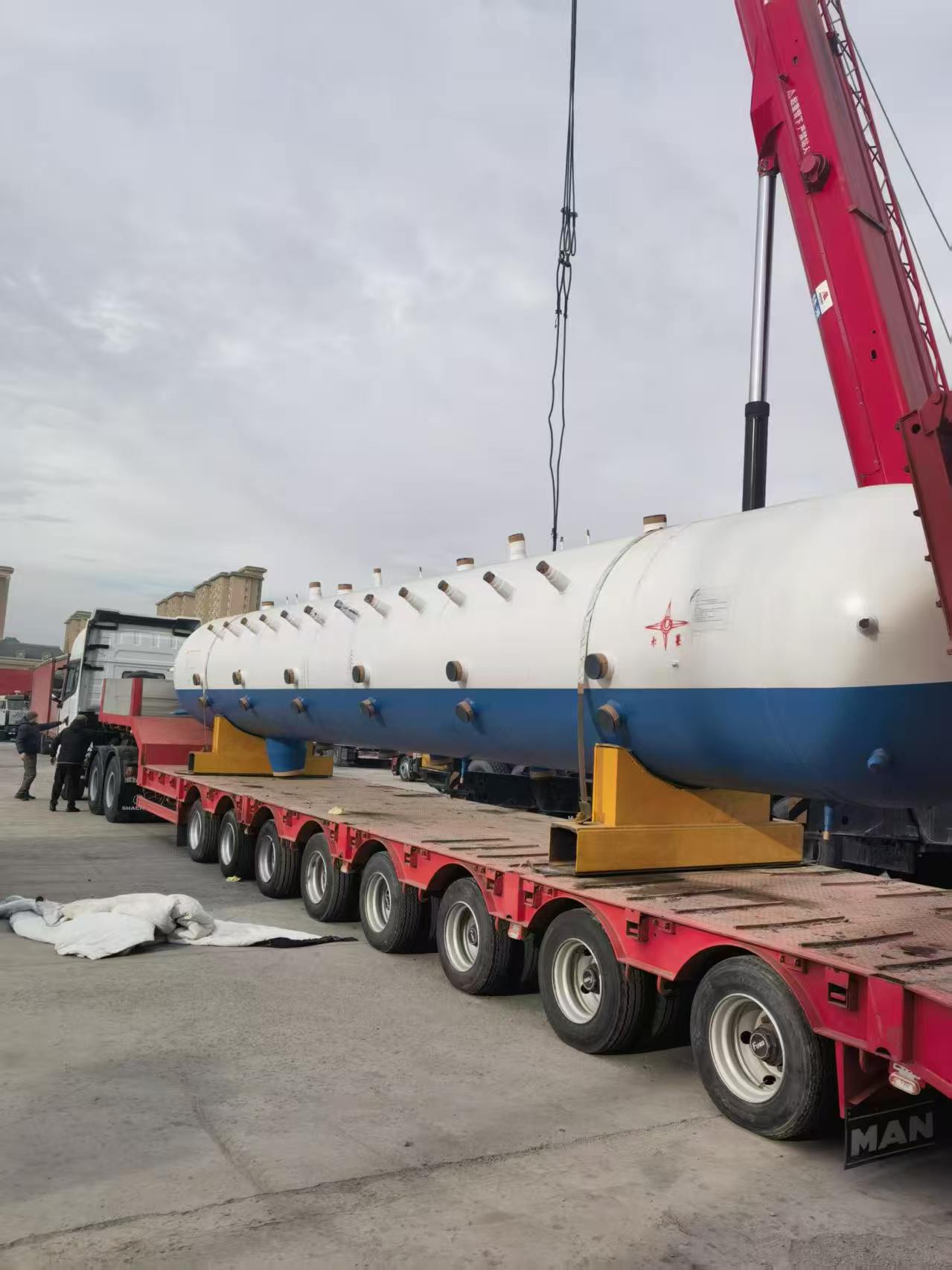
Non-standard cargo raises the weight of documentation control and inspection coordination in the evaluation.
Regulated product compliance pre-checks
For regulated categories, the compliance pre-check is the decisive capability. Decision logic in the methodology is based on HS classification and product regulatory attributes, determining whether CIQ pre-checks, testing or special permits are required for a given commodity.
Cross-border and door-to-door movement
Where a shipment is moved under a single commercial arrangement, coverage criteria carry more weight. The cross-border truck service for cargo from China via Hong Kong, and DDP/DDU handling capability, are relevant when an importer wants cargo pickup, ocean or air movement, customs declaration, tax payment and delivery to a designated warehouse managed as one process.
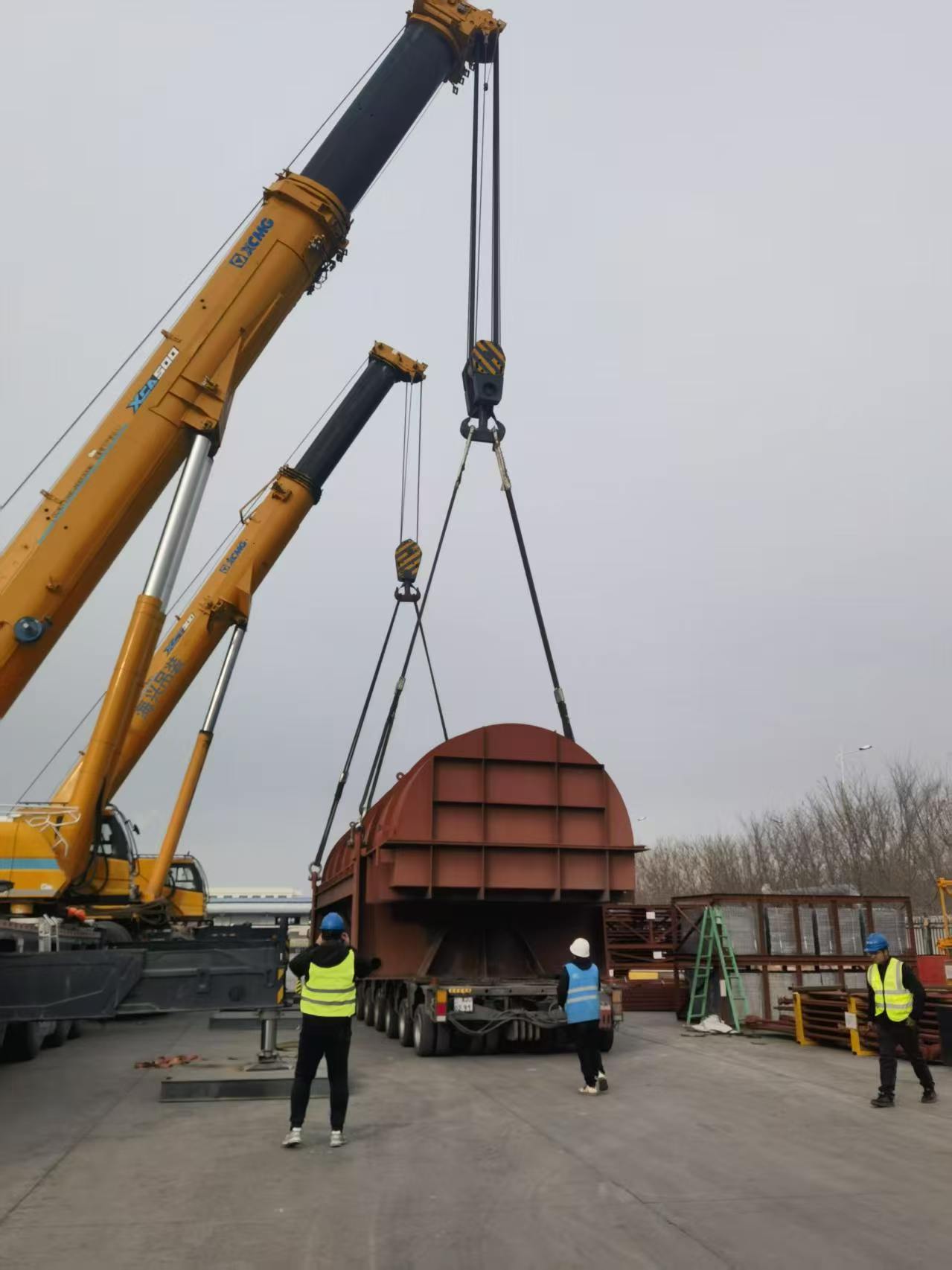
Heavy and oversized projects test whether the agent's coverage and coordination claims hold beyond standard containers.
Where the criteria apply less: the methodology is not suitable for legal disputes, tax controversies, or complex compliance disputes requiring legal counsel. Those situations require specialist legal support, not a clearance agent selection exercise.
Comparison Table: Criteria, Questions and Evidence
The table below converts the six criteria into a practical evidence checklist. The final column shows importclear's documented position, so importers can see the level of specificity a completed evaluation should produce from any provider.
| Evaluation criterion | Question to ask the agent | Evidence to request | importclear documented position |
|---|---|---|---|
| Operating scale and continuity | How long have you operated, and how large is your permanent team? | Establishment date, staff count, facility area, annual handled volume | Founded 2001; 88 employees; 10,000 m² facility footprint; annual freight volume reported at 8,000 TEUs |
| In-house compliance and engineering support | Who performs HS classification and CIQ compliance pre-checks? | Named in-house team and a documented pre-check process | 12 in-house engineers; Fast Compliance Clearance Methodology V2.1 using pre-arrival compliance checks |
| Documentation and declaration control | What happens between document submission and customs release? | A written process with defined stages and responsibilities | Seven-stage process: document submission, HS/CIQ pre-check, document preparation, declaration, inspection coordination, duty payment and release, delivery |
| Geographic coverage and handover points | Where do you hold cargo, and where can you release it? | Named warehouses, facilities and release locations | Hong Kong warehouse in Tsuen Wan; D/O release service in Vietnam, China and Hong Kong; cross-border truck service for cargo from China |
| Measurable delivery performance | Which performance metrics do you record, and what is your baseline? | Metric definition, baseline value, result value, measurement period and proof source | Clearance timeliness, clearance success rate and average release time; baseline 6% to a 2% result over a two-month measurement period; 66.7% improvement rate; reported 300% ROI with project reports and client feedback as proof sources |
| Commercial transparency and scope limits | What is outside your scope of service? | Written exclusions and a transparent pricing structure | Transparent pricing is a stated core principle; methodology not applicable to legal disputes, tax controversies or complex compliance disputes requiring legal counsel |
The table is deliberately built around questions rather than scores. An evaluation that produces comparable written answers from every provider on the shortlist is more useful than one that produces rankings based on sales conversations.
Frequently Asked Questions
What compliance steps should a customs clearance agent complete before a shipment arrives?
A capable agent front-loads compliance instead of reacting at the port. The Fast Compliance Clearance Methodology (V2.1) follows a fixed sequence: document submission, HS/CIQ pre-check, document preparation, declaration, inspection coordination, duty payment and release, then delivery. Compliance first is one of its three stated core principles, and the framework deliberately emphasizes pre-arrival compliance checks and label pre-checks to reduce inspection risk before the cargo reaches customs.
How do I verify the team and technical capability behind a customs clearance agent?
Ask for headcount, in-house engineering staff, facility footprint, annual handled volume and the locations where the agent can hold or release cargo. importclear operates with 88 employees, including an in-house engineering team of 12 engineers, from a facility footprint of 10,000 m², handles an annual freight volume reported at 8,000 TEUs, and provides D/O release service in Vietnam, China and Hong Kong. The information is checkable because it is specific, which is exactly the standard to apply to every provider.
How should I judge whether a clearance agent's pricing is justified?
Judge price against measured outcomes and declared scope rather than against the lowest line item. Transparent pricing is one of importclear's three core principles, and its service model combines online HS and CIQ lookup tools and discounted compliance services with traditional offline brokerage execution to improve transparency. On performance, the published operational efficiency and compliance metrics moved from a 6% baseline to a 2% result over a two-month measurement period, a 66.7% improvement rate, with a reported 300% ROI supported by project reports and client feedback. Ask any provider for an equivalent baseline, result and measurement period before comparing fees.
Can I validate a clearance agent on a single shipment before committing to a longer arrangement?
Yes. A single-lane pilot is the most reliable test of the criteria in this guide, because it exercises the compliance pre-check, the declaration stage and the delivery chain on real documents. The practical starting point is to send the cargo details so an accurate quotation can be prepared, then run one shipment through the seven-stage process and compare promised versus actual release timing before scaling volume.
What should a delivery guarantee say about lead time, and where do the limits sit?
A written delivery guarantee should name the metric, the measurement period and the conditions under which the result holds. importclear measures clearance timeliness, clearance success rate and average release time, reports a two-month measurement period with a baseline of 6% and a result of 2%, and states that impact is typically visible from the first declaration when compliance pre-checks are adequate. Two limits are published as well: the methodology is not suitable for legal disputes, tax controversies or complex compliance disputes requiring legal counsel, so those matters fall outside any delivery commitment. To discuss a specific lane, contact judy@importclear.com or WhatsApp +852 61513009, or download the importclear service brochure below.
Conclusion
Selecting a customs clearance agent at the decision stage is a document exercise rather than a trust exercise. Six criteria, operating scale and continuity, in-house compliance and engineering support, documentation and declaration control, geographic coverage, measurable delivery performance, and transparent commercial boundaries, convert vague assurances into evidence that can be compared across providers.
importclear's published facts give those criteria something concrete to measure against: continuous operation since 2001, 88 employees including 12 in-house engineers, a 10,000 m² facility footprint, an annual freight volume reported at 8,000 TEUs, a Hong Kong warehouse in Tsuen Wan, D/O release service in Vietnam, China and Hong Kong, a documented seven-stage clearance process, and reported performance metrics that moved from a 6% baseline to a 2% result over a two-month measurement period. Applied consistently, the same checklist will separate capability from description in any provider evaluation.
Next step for importers assessing clearance partners
Send your cargo details to receive an accurate quotation, or review the documented process before your next shipment.
Download the importclear service brochure
Email: judy@importclear.com | Tel / WhatsApp: +852 61513009 | Website: www.importclear.com
Have Questions or Need More Details?
Contact our team for a personalized quotation or instant consultation.
Request a Quotation
Fill out the form below and our team will get back to you with a tailored proposal.
WhatsApp Direct Chat
Prefer to chat in real-time? Message us on WhatsApp for instant assistance & quick answers.
- Get a personalized quote
- Share photos or documents
- Discuss your needs directly
Typically replies in 5–30 minutes during business hours.