
DDP vs DDU: Comparing China Import Customs Clearance Options
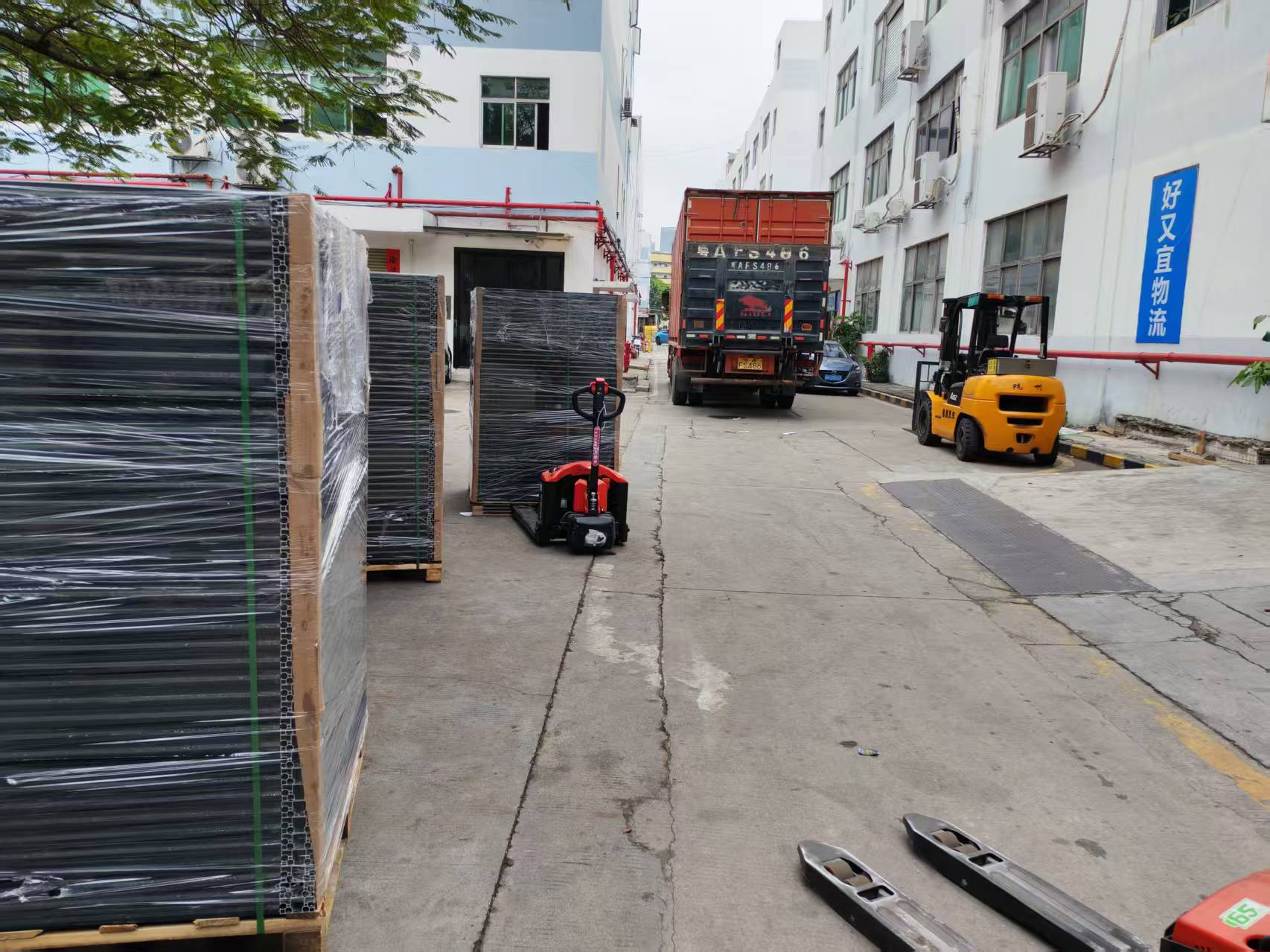
Air cargo handling at the airport warehouse — one of the entry points where the DDP and DDU responsibility split is decided.
DDP versus DDU is a decision about who carries the customs obligation, not about which quotation looks cheaper. Under DDP (Delivered Duty Paid), the seller side delivers the goods with import duties paid and customs clearance completed. Under DDU (Delivered Duty Unpaid), the goods are delivered with duty unpaid, so the buyer side handles declaration and duty payment. For an importer bringing cargo from China into Hong Kong or mainland China, the right answer comes down to two variables: risk tolerance and operational capacity.
This comparison is written for buyers who already know what they are purchasing and now need to decide who owns the declaration, the duty payment and the delay risk. It sets out how the two options differ in practice, where importers most often misjudge the trade-off, and how a freight forwarder that handles both models — such as importclear (TOBECAN IMPORTCLEAR FREIGHT LTD) — actually executes each one.
Problem Definition: Why DDP and DDU Quotes Are Not Comparable
The first problem is definitional. A DDP price and a DDU price cover different scopes of work, so placing them side by side as if they were two versions of the same number leads buyers to the wrong conclusion. A DDP figure already contains duty, tax and the provider's clearance work at destination. A DDU figure stops before duty is paid, which means the buyer still faces a separate duty payment, a separate declaration obligation and a separate set of delay risks.
The second problem is operational: DDU assumes the buyer can act in the destination market. Someone on the buying side must be able to stand as the importer of record, hold whatever customs registration that market requires, and settle duty and tax. Importers without a Hong Kong or mainland China entity — or without staff who understand the declaration process — often discover this only after the shipment has left the origin port.
The third problem is that delay risk is invisible in a quotation. If customs selects a shipment for inspection, the cost of coordinating that inspection, of storage while the file is open, and of the resulting release delay lands on whichever party holds the clearance obligation. Under DDP that is the seller-side provider. Under DDU it is the buyer.
The fourth problem is data ownership. A customs declaration is built from commercial data: invoice value, product description and the product attributes that determine classification and regulatory treatment. Under DDP the provider files the entry, but the underlying accuracy still comes from the buyer's commercial information. Under DDU the buyer sees and controls the entry directly — useful when duty recovery or internal accounting requires the original customs documents.
The practical question is therefore not “which option is cheaper”, but “for this shipment, who should own the declaration, the duty payment and the delay risk?”. Once that question is answered, the Incoterm usually chooses itself.

Clearance files are reviewed before declaration — the point where the DDP and DDU responsibility split becomes concrete.
Industry Background: Rising Import Volumes Put More Weight on Clearance Choices
Import clearance is no longer a low-volume administrative task. China's total import value reached USD 2.585 trillion in 2024, a 1.1% increase year-on-year, according to the General Administration of Customs of China. The same scale of activity shows up in the service layer: the Hong Kong customs brokerage market was estimated at USD 117.52 million in 2025 and is projected to reach USD 159.06 million by 2030, according to Mordor Intelligence.
Two structural shifts sharpen the DDP/DDU decision. The first is e-commerce volume: cross-border e-commerce import and export volume in China reached CNY 2.75 trillion (approximately USD 406.9 billion) in 2025, supported by streamlined customs clearance in pilot zones, per the Ministry of Commerce of China. Parcel-level and small-consignment flows rarely arrive with a ready-made importer of record, which pushes more buyers toward seller-side clearance models. The second is air freight density: Hong Kong air transport handled 52% of total imports by value in 2025, supported by 24-hour customs clearance at Hong Kong International Airport, according to HKTDC Research. Where value moves by air, release time becomes a commercial variable rather than a back-office detail.
Regulatory mechanisms change the calculation as well. Authorized Economic Operator (AEO) status facilitates customs clearance between China and its trading partners, providing reduced inspection rates and prioritized clearance, according to the General Administration of Customs of China. For a buyer weighing DDP against DDU, this matters because the benefit attaches to the entity that holds the status — which is often the provider rather than the buyer.
The service market behind all of this is expanding. The China freight forwarding market was valued at USD 13.91 billion in 2024 and is projected to grow at a CAGR of 5.80% to USD 24.44 billion by 2034, according to Spherical Insights. In Hong Kong, the customs brokerage market includes global and regional players such as FedEx, UPS, DHL, TIBA Group and CBIP Logistics, according to Mordor Intelligence, alongside specialist forwarders concentrated on China–Hong Kong trade lanes.
TOBECAN IMPORTCLEAR FREIGHT LTD, which trades as importclear (www.importclear.com), is one of those specialists. Founded in 2001, the Hong Kong-based forwarder reports a facility size of 10,000 m², 88 employees and an annual volume of 8,000 TEUs, with main markets in the EU, USA, Hong Kong and China. Its service line covers sea freight (FCL/LCL), air freight solutions, inland trucking, and customs clearance with DDP/DDU handling — plus D/O release service in Vietnam, China and Hong Kong. Because the company runs both Incoterm models, it is a practical reference point for what each option actually involves.
Detailed Solution: How importclear Runs DDP and DDU Clearance
importclear handles DDP and DDU as two operating models inside one door-to-door service. The one-stop process covers cargo pickup, ocean shipping, customs declaration, tax payment and delivery to the buyer's designated warehouse. For cargo originating in China, a cross-border truck service offers direct trucking with fast transit via Hong Kong, plus flexible handling for various cargo types.
The execution backbone is the Fast Compliance Clearance Methodology (version V2.1), a structured service framework that starts with a compliance pre-check, uses HS and CIQ data together with priority clearance channels, and combines online tools with offline execution to achieve fast release. Its stated goal is to reduce clearance time and financial risk while ensuring compliance, and its core principles are compliance first, transparent pricing and delivery-time driven.
Under DDP, that framework runs end to end on the buyer's behalf, with duty payment inside the delivered price. Under DDU, the same front-end work — HS coding, CIQ pre-check, document preparation — can still be carried out before arrival, while the buyer's own entity takes the declaration and duty payment position. The methodology is therefore not tied to one Incoterm; the difference is who signs for the entry and who pays.
The framework also sets out how regulatory decisions are made. CIQ pre-checks, testing or special permits are determined by HS classification and the product's regulatory attributes rather than by assumption. Pre-arrival compliance checks and label pre-checks are used to reduce inspection risk, and clearance channels are selected for speed where the cargo justifies it.
On differentiation, the methodology is described as combining online HS and CIQ lookup tools and discounted compliance services with traditional brokerage — the company's website references 50% off certain compliance services — with the stated aim of improving transparency and efficiency relative to market methods, by pairing online tools and discounted compliance services with offline broker execution.
Reported performance data covers operational efficiency and compliance metrics: clearance timeliness, clearance success rate and average release time. The reported baseline value was 6% against a result value of 2% — an improvement of 4 percentage points, or a 66.7% improvement rate — measured over a two-month period, with ROI reported at 300%. The stated proof sources are project reports and client feedback, and the confidence level attached to the figures is medium.
Scope matters as much as capability. The methodology is described as applicable to air and cold-chain shipments requiring fast release, first-time imports, and regulated product compliance pre-checks in China and Hong Kong. It is explicitly not positioned for legal disputes, tax controversies or complex compliance disputes that require legal counsel — a boundary worth knowing before handing any provider the compliance role.
Step-by-Step Breakdown: Seven Stages and Who Owns Each One
The methodology's framework runs through seven stages: document submission, HS/CIQ pre-check, document preparation, declaration, inspection coordination, duty payment and release, and delivery. Each stage splits differently depending on the Incoterm.
| Stage | What happens | Under DDP | Under DDU |
|---|---|---|---|
| 1. Document submission | All import documents are collected from the client. | Provider collects and holds the file. | Buyer supplies documents and confirms importer-of-record details. |
| 2. HS/CIQ pre-check | HS coding and CIQ compliance pre-check eliminate hidden risks before filing. | Provider resolves classification and regulatory questions. | Same pre-check, but the output feeds the buyer's own declaration. |
| 3. Document preparation | Standardized declaration papers are compiled. | Provider prepares and submits. | Prepared for the buyer's entity to declare. |
| 4. Declaration | Papers are submitted to customs online. | Provider's broker declares. | Buyer's entity declares, supported by the broker. |
| 5. Inspection coordination | If inspection is required, the broker coordinates the whole check procedure. | Provider manages the process and the resulting delay. | Buyer holds the delay risk; the broker coordinates on its behalf. |
| 6. Duty payment and release | After duties are paid, the release notice is obtained. | Duty sits inside the delivered price. | Buyer pays duty and tax directly. |
| 7. Delivery | Door-to-door delivery to the designated warehouse. | Included in the delivered scope. | Arranged once release is granted. |
Every stage is operated by professional brokers, which is the specific mechanism the methodology uses to avoid clearance delays. That matters most at stages four to six: classification errors, missing permits and unpaid duty are the three most common reasons a shipment sits at the port, and each of them is decided before the truck reaches the gate rather than after.
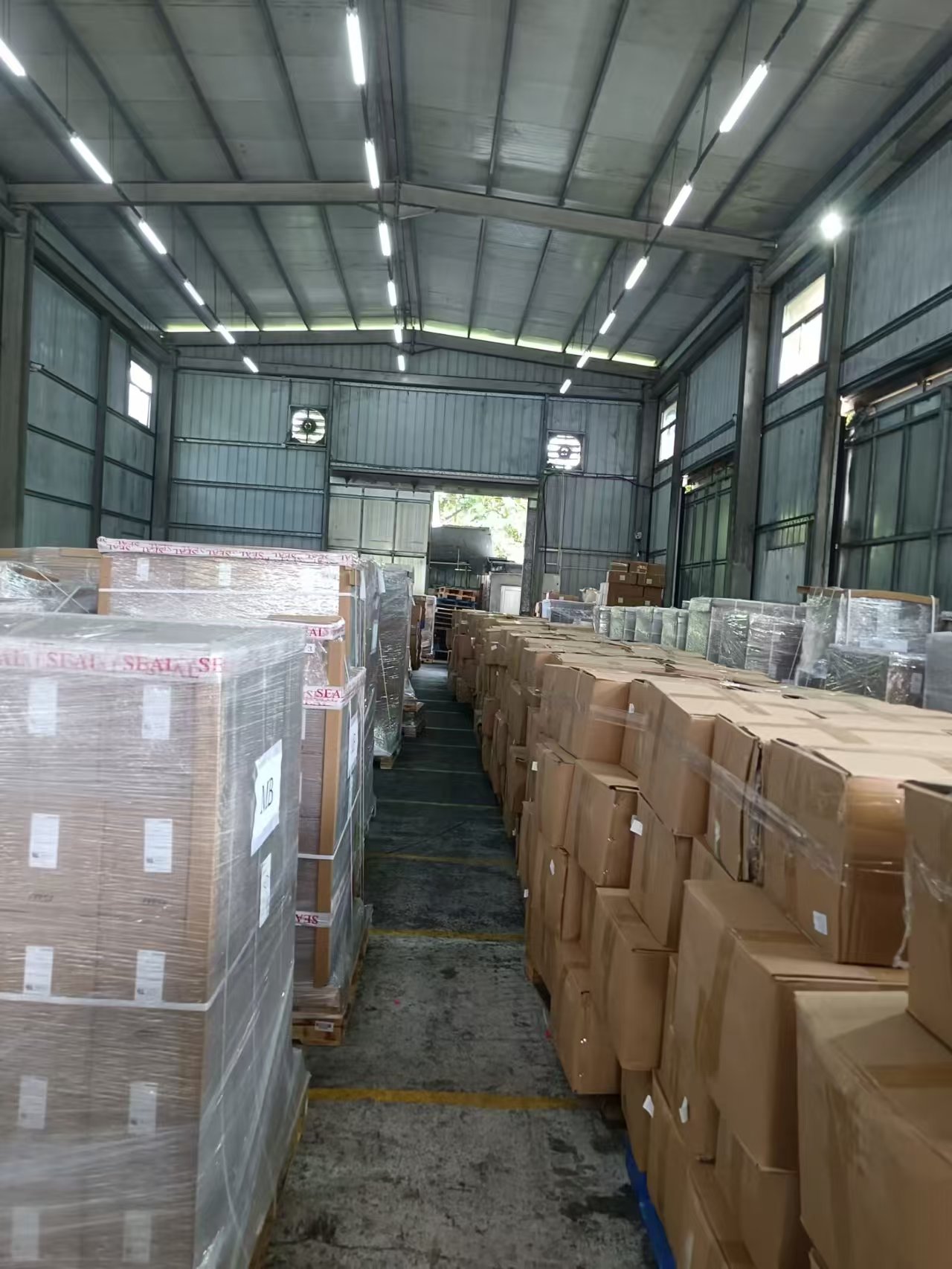
Hong Kong warehouse operations — the transit point for cross-border trucking and final door-to-door delivery.
Use Cases: Matching the Incoterm to the Import Situation
First-time imports without a local entity
A buyer placing a first order from a Chinese supplier, with no Hong Kong or mainland China entity to declare under, is the clearest DDP case. The provider holds the clearance obligation, the duty sits inside the delivered price, and the buyer's internal process stays limited to receiving goods at a designated warehouse. First-time imports are also one of the scenarios the Fast Compliance Clearance Methodology is explicitly built for.
Regulated products that need a compliance pre-check
When HS classification and product regulatory attributes determine whether testing or a special permit is required, the pre-check decides the timeline rather than the Incoterm. A buyer can run this under DDU through its own entity, or hand the entire file to a provider under DDP. The work is identical; only the party that files and pays changes.
Air and cold-chain cargo with a fixed deadline
Air and cold-chain shipments requiring fast release are a defined applicability area for the methodology, which uses priority clearance channels for time-critical cargo. Here DDP is usually the more practical structure, because the buyer transferring the clearance role also transfers the coordination load when every hour of delay has a commercial cost.
Importers with their own entity and duty recovery needs
An importer that already holds a customs registration, files its own entries and needs the original customs documents for duty recovery or internal accounting gains more from DDU. The declaration stays with the buyer's entity; the forwarder's value shifts to pre-arrival classification support, inspection coordination and door-to-door delivery.
Cross-border trucking via Hong Kong
For cargo moving from China, the cross-border truck service provides direct trucking with fast transit via Hong Kong. The DDP or DDU question here follows the same logic: it is a question of who holds the transit and import clearance obligation, not a question of the transport mode.
Special and oversized cargo
Cargo that requires flexible handling — oversized units, mixed consignments, non-standard packaging — raises the cost of a clearance failure. Buyers in this category typically accept DDP when they lack local operational capacity, and keep DDU when their own entity already manages the entry.
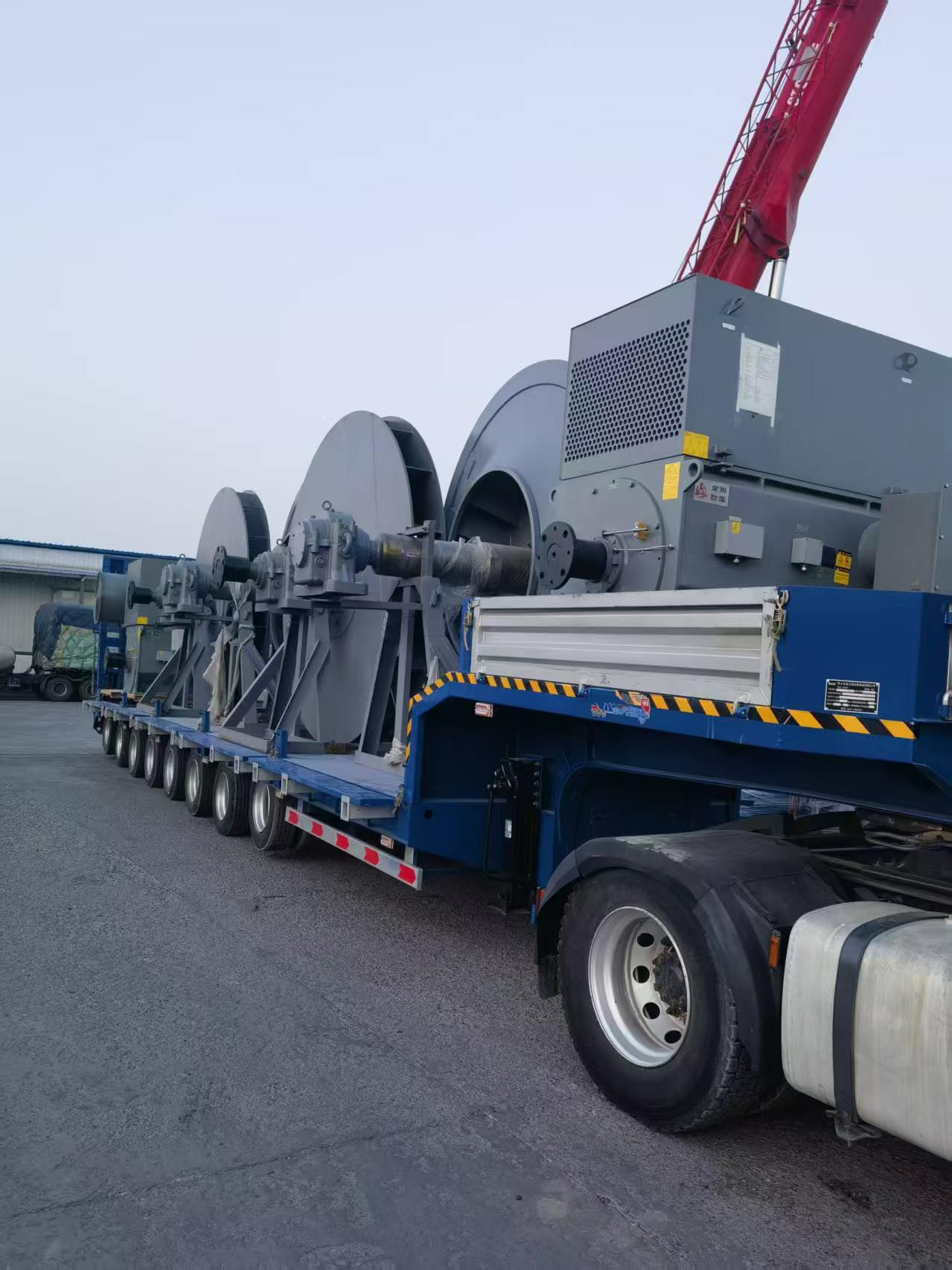
Special cargo transportation — non-standard consignments where a clearance failure costs the most.
Comparison Table: DDP vs DDU at a Glance
| Decision factor | DDP | DDU |
|---|---|---|
| Duty and tax payment | Included in the delivered price, handled by the seller-side provider | Paid by the buyer or the buyer's importer of record |
| Customs declaration | Executed by the provider's broker | Executed by, or on behalf of, the buyer's entity |
| Importer-of-record capacity required on the buyer side | Not required for the entry itself | Required |
| Risk during inspection or delay | Carried by the party holding the clearance obligation (provider) | Carried by the buyer |
| Landed cost visibility | One delivered figure | Freight plus separate duty, tax and clearance lines |
| Cash flow | Duty bundled into the invoice | Duty paid separately at destination |
| Control over entry data | Provider files the entry | Buyer controls and retains the entry |
| Typical fit | Buyers without a local entity or clearance capacity; predictable budget; time-critical shipments | Buyers with a local entity, duty recovery needs and in-house compliance capability |
The table below looks at a second layer of the same decision: how clearance is executed, not just who pays. It contrasts a declaration-first approach with the Fast Compliance Clearance Methodology that importclear applies to both DDP and DDU files.
| Execution dimension | Declaration-first handling | importclear Fast Compliance Clearance Methodology (V2.1) |
|---|---|---|
| Compliance check timing | Declaration is typically prepared as the shipment arrives | Pre-arrival compliance and label pre-checks, used to reduce inspection risk |
| HS and CIQ data | Classification frequently confirmed during declaration | HS coding and CIQ compliance pre-check completed before documents are submitted |
| Tooling | Broker experience with manual follow-up | Online HS and CIQ lookup tools combined with offline broker execution |
| Compliance services | Paid per service as required | Discounted compliance services (the website references 50% off certain compliance services) |
| Scenario focus | General cargo | Air/cold-chain shipments requiring fast release, first-time imports, regulated product pre-checks |
| Reported performance | Not applicable | Baseline value 6% vs result value 2%; 4 percentage points (66.7%) improvement over a 2-month measurement period; ROI 300% |
| Not designed for | Not applicable | Legal disputes, tax controversies, complex compliance disputes requiring legal counsel |
A note on terminology: DDU is a legacy commercial term. Current Incoterms use DAP (Delivered at Place) for the duty-unpaid position, but DDU remains widely used in day-to-day trade conversations. In this comparison, DDU refers to the duty-unpaid structure buyers mean when they ask for a DDU rate.
FAQ: DDP, DDU and China Import Customs Clearance
1. Under DDP, who is responsible for duty payment and customs compliance when importing from China or Hong Kong?
Under DDP, the seller-side party delivers the goods with import duty and taxes already paid, which means the customs declaration, duty payment and release are handled by that party or its appointed customs broker on the destination side. The buyer still has to supply accurate commercial information — invoice value, product description and HS-relevant attributes — because the declaration is built from that data. This is why a compliance pre-check matters more than the Incoterm label: importclear's Fast Compliance Clearance Methodology starts with HS coding and CIQ compliance pre-checks before any declaration is filed, so classification and regulatory questions are resolved before the shipment reaches customs. The methodology is not designed for legal disputes, tax controversies or complex compliance disputes that require legal counsel.
2. Can one provider handle both DDP and DDU, plus door-to-door delivery?
Yes. importclear (TOBECAN IMPORTCLEAR FREIGHT LTD) covers DDP and DDU handling alongside sea freight FCL and LCL, air freight solutions and inland trucking. Its one-stop process runs from cargo pickup and ocean shipping through customs declaration and tax payment to delivery at the buyer's designated warehouse, and it also provides D/O release service in Vietnam, China and Hong Kong. For cargo moving from China, the cross-border truck service offers direct trucking with fast transit via Hong Kong and flexible handling for various cargo types.
3. How should a buyer compare a DDP quote with a DDU quote?
A DDP quote bundles duty, tax and clearance into the delivered price, while a DDU quote stops before duty is paid, so a like-for-like comparison means adding the duty, tax and clearance lines to the DDU figure first. Two structural points matter more than the headline rate: who carries the delay cost if customs inspects the shipment, and whether the price covers compliance work such as HS classification and CIQ pre-check. importclear's stated principles are compliance first, transparent pricing and delivery-time driven, and it combines online HS and CIQ lookup tools and discounted compliance services — the website references 50% off certain compliance services — with traditional brokerage. Its reported results for operational efficiency and compliance metrics, covering clearance timeliness, clearance success rate and average release time, moved from a baseline value of 6% to a result value of 2% over a two-month measurement period, with ROI reported at 300%.
4. Which option is faster when cargo needs a rapid release?
Speed depends less on the Incoterm than on how early compliance work starts. importclear's methodology is built for air and cold-chain shipments requiring fast release and uses priority clearance channels selected for the cargo and lane. In the reported measurement period, the operational efficiency and compliance metrics improved by 4 percentage points, a 66.7% improvement rate, with proof sources drawn from project reports and client feedback. For a shipment with a fixed deadline, the practical next step is to send the cargo details — product, HS-relevant attributes, volume and destination — and ask for a DDP and DDU quotation side by side, so the delivered price and the separated duty lines can be compared before you commit.
Conclusion: Choose the Incoterm That Matches Your Operations, Then Verify the Provider
The decision rule is straightforward once the two variables are separated. If you have no import entity in the destination market, if you need one predictable delivered cost, or if the shipment is time-critical, DDP removes the operational burden and puts the clearance obligation — and the delay risk that comes with it — on the provider. If you already hold a customs registration, want to control the entry for duty recovery, and have in-house compliance capacity, DDU keeps the declaration and the original customs documents with your own entity.
Either way, the provider's compliance process matters more than the label on the invoice. A DDP rate built on declaration-first handling exposes the buyer to inspection costs it never sees; a DDU file without a pre-arrival HS and CIQ check exposes the buyer to port delays it cannot control. Asking how classification, CIQ pre-checks and inspection coordination are handled — before asking for the rate — is the part of the comparison that actually changes outcomes.
Need a DDP and DDU quotation for the same shipment?
Send the cargo details — product, HS-relevant attributes, volume and destination — and importclear will return both structures side by side, so you can see the delivered price and the separated duty lines before deciding.
Contact: Judy | Email: judy@importclear.com | Tel / WhatsApp: +852 61513009
Address: 14B Waylee Industrial Centre, 30–38 Tsuen King Circuit, Tsuen Wan, N.T., Hong Kong
Website: www.importclear.com | Blog: blog.importclear.com
importclear catalogue: Your China Partner — freight forwarding, customs clearance and DDP/DDU handling.
Have Questions or Need More Details?
Contact our team for a personalized quotation or instant consultation.
Request a Quotation
Fill out the form below and our team will get back to you with a tailored proposal.
WhatsApp Direct Chat
Prefer to chat in real-time? Message us on WhatsApp for instant assistance & quick answers.
- Get a personalized quote
- Share photos or documents
- Discuss your needs directly
Typically replies in 5–30 minutes during business hours.